Bio›BioLab›Chum Cloud
Last updated:

Release a cloud of delicious bait to distract predators
Required scans
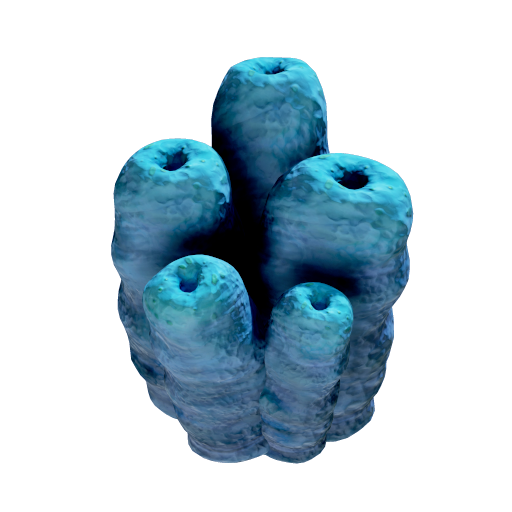 Toxic SpongeSpongeSessile
A hateful and malicious sponge. Assessing PDA neural temperature. Reducing output subjectivity. *Symphon achlys*, sponge of dying mist. A dangerous semi-predatory sponge that acts as the central node in a necrobiome. 1. Bacterial arsenal Sponges cultivate bacteria which secrete helpful chemicals. At some point in its history the toxic sponge was infected by a bacterial symbiote which generated a powerful antibiotic (akin to the human Streptomyces). The bacterium used this antibiotic to extinguish competition, then began an internal power struggle to evolve compounds that could destroy rival strains of its own species. The result is a sponge flush with an antibiotic so concentrated it causes skin burns and nerve damage. 2. Touch based hunting strategy When brushed, the sponge contracts sharply, expelling a cloud of antibiotic toxin. Microorganisms are killed, and larger species may enter convulsions and die nearby. The dead matter decomposes, releasing nutrients upon which the sponge feeds. 3. Animal gene fragments The toxic sponge's genetic code contains fragment of an animal genome: likely a crustacean. Assessment: avoid. Keep medical supplies on hand to treat chemical burns and nerve damage.
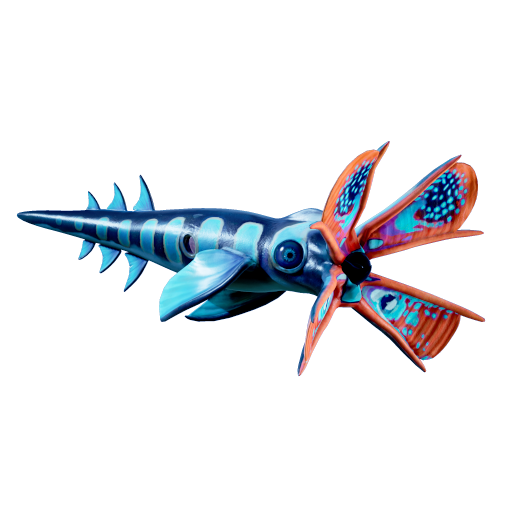 HoundgarFishMobile
Houndgar (tentatively *Teuthis courser*). A squid that dazzles prey for marrowbreach ambush. 1. Squidlike body plan Shares a basic bauplan (body plan) with terrestrial squid — a beaked head, eight arms, a long soft body, a pair of fins. Developed fin structure suggests a different evolutionary history than Earth's boneless squid. Two spiracles pass water for an internal gill. 2. Camouflage display The houndgar's eight arms are joined by four membranes, which the houndgar displays to prey. Millions of chromatophores (biological pixels) create patterns of motion camouflage to conceal the houndgar's approach. 3. Marrowbreach partnership Houndgars are ideal prey for marrowbreaches, but the two species hunt together. The houndgar flushes prey from hiding, then distracts and marks them for the marrowbreach's poor vision by performing a display. The houndgar gets the scraps—the bigger the prey, the more the houndgar benefits. 4. Powerful beak The houndgar's parrot-like beak tears tough flesh: important because everything the houndgar swallows passes through the center of its brain. 5. Speculative social structure Squads of houndgars must spot good prey for their marrowbreaches or become food themselves; marrowbreaches must attract good houndgar squads by yielding more of their kills. Houndgars push the marrowbreach to take ever larger prey. The negotiation of an ongoing contract between houndgars and marrowbreach is a reminder of Alterra Alms' mantra that 'we all need to be needed'. Assessment: houndgar displays may signal an imminent marrowbreach attack. Possibly intelligent, perhaps trainable.